
Your situation7-minute readFor hospital medtechs reviewing on night shifts
How to review for the ASCPi while working night shifts in a hospital lab
How to review for the ASCPi while working night shifts: protect sleep, use short recall blocks, sit full mocks on off days, and check how your shifts count.
If you work nights in a hospital laboratory, you know the problem: the day you would study is the day you are asleep, and the evening is the start of your shift. Many registered medtechs still manage to review for the ASCPi while working, and they do it by planning around the rotation, not by finding extra hours that do not exist.
This post is written for you. It covers sleep, a rotation-proof week, short blocks on breaks, full mocks on off days, how your shifts relate to the experience routes, and the final weeks. We offer general wellbeing advice only, and we cannot promise any exam result.
How do you review for the ASCPi while working nights?
For most night-shift medtechs, the real constraint is time and sleep, not ability. You already work with the content. What you lack is a stretch of alert, rested hours, and sleep debt makes every study hour worth less.
So the first rule is to protect sleep. Treat your sleep block as non-negotiable and build the study plan around it. This is general wellbeing advice and not medical guidance; if you have persistent trouble sleeping, talk to a doctor.
The second rule is to match the task to your energy. Reading new material and working through hard explanations need your best hours. Recall and light revision can survive a tired afternoon. Full mocks need both stamina and alertness, so they get a day when you are not coming off a shift.
The third rule is to plan by week, not by day. Your rotation changes your rhythm, so a fixed "two hours every evening" plan collapses within a fortnight. A weekly target of blocks, tied to your roster, is more realistic.
How do you build a rotation-proof weekly plan?
Build the week from your roster. Count the sessions you can honestly protect, then assign each a task by energy level. Four reliable sessions beat seven imaginary ones.
Use three kinds of session:
- Deep blocks (60 to 90 minutes): new content and explained question sets, on your most alert days.
- Short blocks (10 to 20 minutes): flashcards and quick recall.
- Mock days: one full run per week in the later weeks, on an off day.
The weights should guide what you study. ASCP BOC's guideline gives Blood Banking, Chemistry, Hematology and Microbiology 17 to 22% each, and Urinalysis and Other Body Fluids, Immunology and Laboratory Operations 5 to 10% each. Work the larger four most, but keep touching the smaller three.
Our 12-week study plan gives the longer arc. Use it as the frame and fit it to your roster.
What can you study in short blocks on breaks?
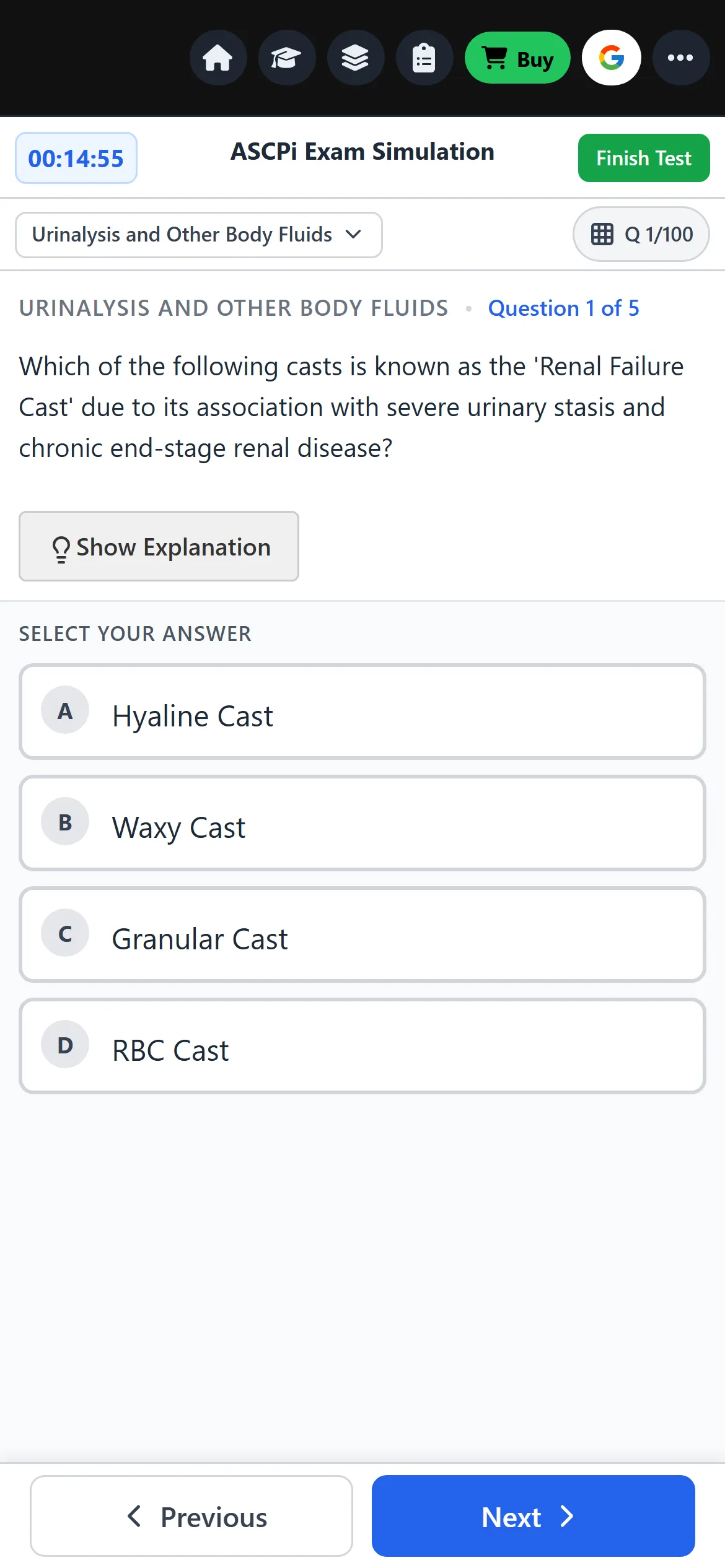
Short blocks suit recall: flashcards, a handful of items, or a quick pass through an error log. Ten minutes of retrieval practice can fit a legitimate meal break, a wait at a bus stop or a ride home.
One rule needs to be firm. Never study while you are on duty at the bench. Patient results come first, and your employer's policies apply. Use only the breaks you are entitled to take, and keep your study material out of the work area.
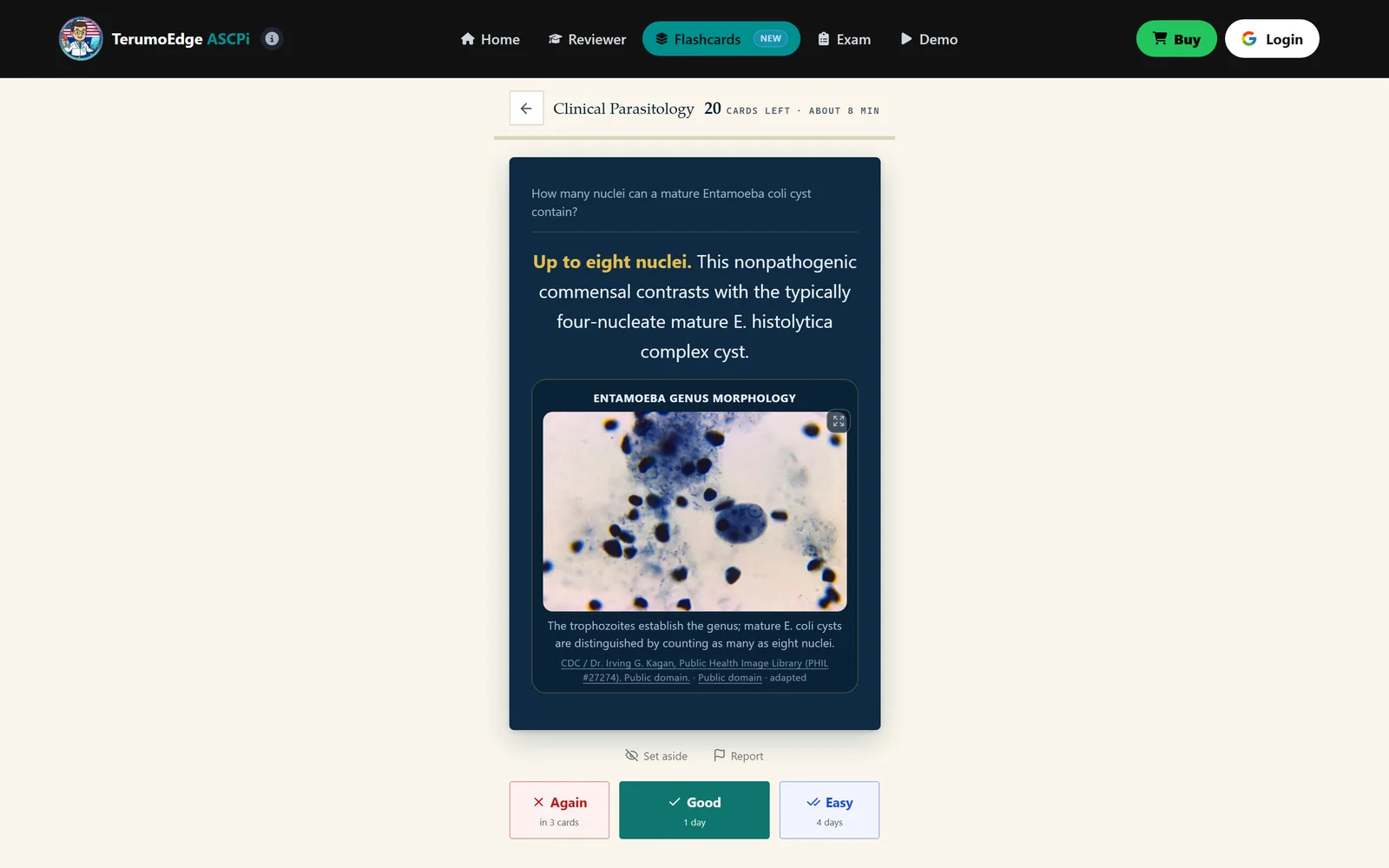
The TerumoEdge flashcards hold 1,000 cards across laboratory subjects, and they are a shared laboratory science deck, so treat them as recall practice, not a map of the exam. The phone-friendly demo also lets you try five items in each content area. Keep the habit light: one idea, one answer, one reason.
How do full mocks fit on off days?
Full mocks belong on off days, ideally at the hour of your booked sitting. The exam is 100 questions in 2 hours 30 minutes, and your brain should meet that length at a time of day you can actually perform.
If your booking is in the morning and you are used to nights, this deserves care. Shift your sleep gradually in the final weeks, if your roster allows, so that your sitting falls in your alert hours. If your roster does not allow it, rehearse at the booked hour anyway, so that you know how you feel.
On a mock day, follow the real rules. Take the 100 items in 150 minutes in one sitting. Answer each item before moving on, because the real exam does not let you skip, and review flagged items only at the end.
The TerumoEdge mock is a fixed-length practice draw, not the adaptive algorithm, so it rehearses length, clock and format. Read the explanations afterwards, ideally after a rest.
What does a sample week look like across a night rotation?
A sample week shows how the pieces fit. This is an illustration for a seven-night block followed by off days; adapt it to your own roster.
| Day | Shift | Study plan |
|---|---|---|
| Night 1-3 | On | One 10 to 15 minute recall block on a break; sleep protected after shift |
| Night 4-5 | On | Recall block only; one 45-minute set in the late afternoon if rested |
| Night 6-7 | On | Rest-focused; error-log review, 15 minutes |
| Off day 1 | Off | Sleep first; light recall, no heavy study |
| Off day 2 | Off | Deep block on a heavy area (60 to 90 minutes) |
| Off day 3 | Off | Full timed mock at the booked hour, then explanations next day |
| Off day 4 | Off | Review the mock's misses; prepare for the next rotation |
The table is a pattern, not a prescription. The principle is to put light work on tired days, heavy work on rested days, and the mock where it can have your full attention.
Can your hospital shifts count as eligibility experience?
Your clinical experience may count toward the experience-based routes, but whether yours does is for ASCP BOC to say. ASCP BOC lists the MLS(ASCPi) routes. Route 2 pairs a baccalaureate in Medical Laboratory Science/Medical Technology with 3 years of acceptable clinical experience in blood banking, chemistry, hematology and microbiology. Route 4 pairs a baccalaureate in biological science or chemistry with 5 years of clinical experience.
An acceptable clinical laboratory for ASCPi is one accredited by JCI, CAP or ISO 15189, or authorized by a governing regulatory association or a Ministry of Health. ASCP BOC adds that ASCPi experience need not meet the US definition of "full time" or fall within a set timeframe.
So night work in a qualifying laboratory is not automatically a problem. But we cannot tell you how your own hospital's accreditation or authorization is treated, or how your hours would be counted. Confirm with ASCP BOC before you rely on it. Our eligibility guide covers the routes in full.
What about leave and the final weeks?
In the final weeks, consider asking your supervisor early about leave or roster changes around your sitting. We cannot say what your employer allows, so ask in good time and keep the request simple.
If you can, plan the last few days off the night rotation, so that you arrive rested. Our last-month plan sets out what the final 30 days should contain: full mocks, repair of weak areas, a refresh of the US regulatory basis, and a taper.
Check the exam-day rules with ASCP BOC as well. The Pearson procedures document is from 2021, and it says personal items go in a locker and the exam clock keeps running if you step away. Confirm the current rules before the day.
Finally, be kind to yourself. Studying after nights is tiring work. A plan that fits your roster and protects your sleep will serve you better than a heroic plan that fails by the second week.
Frequently asked questions
Can I pass while working nights?
Many medtechs prepare around shift work, but we cannot promise any result. What helps is a plan built on your roster: protected sleep, short recall blocks, one full timed mock a week in the later weeks, and review of every explanation. Treat it as a structure to test and adjust, not a guarantee.
Does my hospital experience count for eligibility?
It may, depending on your route and your laboratory. ASCP BOC's Routes 2 and 4 involve clinical experience, and an acceptable laboratory is accredited by JCI, CAP or ISO 15189, or authorized by a governing regulatory association or a Ministry of Health. Confirm how your own laboratory and hours are treated with ASCP BOC.
How many hours a week should I study?
We make no claim, because it depends on your starting point and your roster. A realistic way to set the number is to count the sessions you can protect each week, assign tasks by energy, and adjust after two weeks. Consistency matters more than a large target you cannot keep.
Should I study at work between tests?
No. Do not study while on duty. Patient care and your employer's policies come first. Use only breaks you are entitled to take, and keep study material away from the bench.
Sources
- Medical Laboratory Scientist, MLS(ASCP) and MLS(ASCPi) Examination Content Guideline — ASCP Board of Certification
- MLS - Medical Laboratory Scientist credential page — ASCP BOC
- Understanding the Similarities and Differences Between ASCP & ASCPi Certification — ASCP BOC
- ASCP BOC/Pearson VUE Candidate Test Center Procedures — ASCP BOC / Pearson VUE
From the publisher
Meet the ASCPi format here first.
TerumoEdge ASCPi is an ASCPi practice simulator: board-length sets and a timed 100-item mock across all seven content areas, with an English explanation for every item instead of a bare answer key. It is a fixed-length practice draw, not ASCP's adaptive test.
- 2,800 items across seven content areas, 400 in each
- Four fixed sets of 100 items per area, and a 100-item full mock in 150 minutes
- An English explanation for every item, not a bare answer key
- A laboratory science reviewer and flashcards beside the question bank
Try the free ASCPi simulator demo Five real items in each of the seven content areas. No account needed.
About this article
Written by the TerumoEdge ASCPi editorial team, who build the TerumoEdge ASCPi Exam Simulator. Exam facts are checked against the ASCP Board of Certification content guideline, its eligibility and exam pages, and the ASCP BOC and Pearson VUE test center procedures, and every article lists its sources. How we write and check our articles.
First published .