
Study strategy7-minute readFor medtechs who freeze under exam pressure
ASCPi anxiety: why a computer adaptive test feels hard even when you are doing well
ASCPi anxiety is common because the adaptive test is built to feel hard. Learn why, plus a rehearsal ladder, a reset routine and when to ask for support.
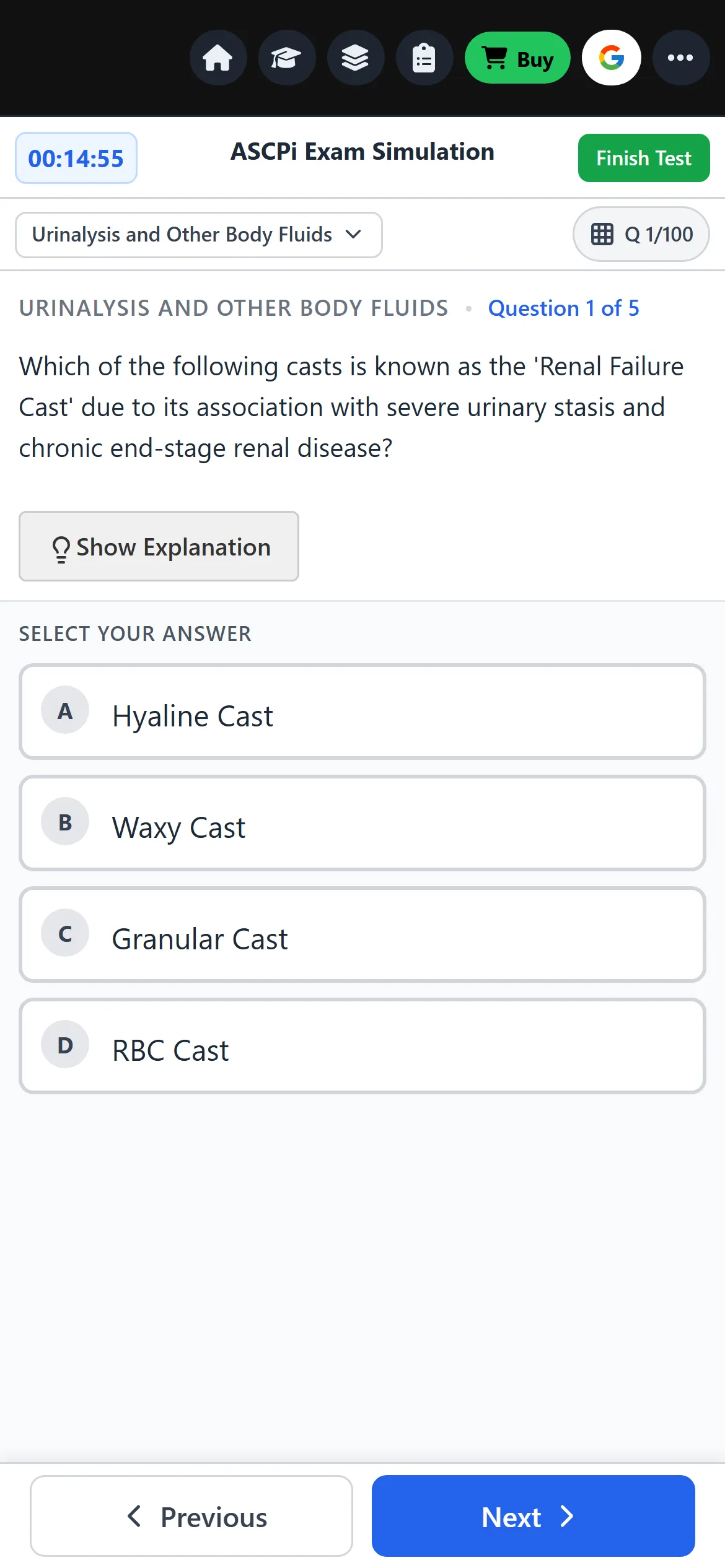
If you feel your pulse climb the moment you picture the ASCPi screen, you are in good company, and ASCPi anxiety has a specific cause worth understanding. The test is built so that most candidates, including strong ones, spend much of it facing questions that feel difficult. Knowing why takes the sting out of the feeling, even if it does not remove it.
This post covers why the exam feels harder than it is, how to make it familiar before the day, a short reset routine, what to do about breaks, and what happens if the result is not what you wanted. It also says when anxiety needs more than a study tip. We are a simulator publisher and not health professionals, so treat what follows as general wellbeing advice.
Why does ASCPi anxiety spike when the exam feels this hard?
The ASCPi feels hard because computer adaptive testing is designed to keep you near the edge of your ability. ASCP BOC explains that the exam begins with a question close to the minimum passing standard. A correct answer brings a slightly harder question, and a wrong answer brings a slightly easier one.
The system selects questions that give you about a 50% chance of answering them correctly. Think about what that means in a testing room. In a school exam, you meet mostly questions you can answer, and the hard ones stand out. Here, you meet questions that are chosen to be close to your limit, and almost all of them feel like the hard ones.
So the sense that "I am getting everything wrong" is not reliable evidence. It is the sensation the design produces. ASCP BOC adds that scoring is based on the overall pattern of responses, and that there is no set number of correct answers needed to pass. No one can read their own result from inside the exam, so nothing in that feeling deserves your trust.
How do you make the exam familiar before the day?
You make it familiar by climbing a rehearsal ladder, where each rung adds one real condition. Dread feeds on the unknown, and each rung removes a piece of it. Move up only when the current rung feels ordinary.
| Rung | What you do | What it removes |
|---|---|---|
| 1 | Untimed sets by content area, reading every explanation | Fear of the content |
| 2 | Timed sets of 100 items in one sitting | Fear of the clock |
| 3 | A full 100-item mock in 150 minutes | Fear of the length |
| 4 | The same mock at the hour of your booked sitting, no phone, no notes | Fear of the setting |
| 5 | A mock with a rule: answer every item before moving on, flag, review at the end | Fear of the no-skip format |
The TerumoEdge simulator gives you the sets and the full mock for rungs 2 to 5. It is a fixed-length practice draw, so it rehearses length, clock, format and content mix, not the adaptive algorithm. A practice percentage is also not a scaled score, so do not read your mock result as a prediction.
What is a reset routine for one hard question?
A reset routine is a fixed, three-step habit that takes about ten seconds and stops one hard question from colouring the next five. Because you cannot skip, every difficult item has to be answered, and the real danger is the mental carry-over.
Write the routine down, and practise it in every mock until it is automatic:
- Breathe out slowly once. Many people find a long exhale settles the body a little.
- Say the stem in your own words. Read the stem and all four options, as ASCP BOC advises, then eliminate what you know is wrong.
- Commit, flag if needed, and let go. Choose the best remaining option. If you are genuinely unsure, flag it for review and move on.
The "let go" step matters most. ASCP BOC notes that changing an answer does not affect questions you already answered. Previous answers cannot be repaired mid-exam, so spending your attention on them only costs the next item.
Also remember that some questions are field-test items. They are unscored and indistinguishable from scored ones, so an odd question may simply not count.
How should you handle breaks and the running clock?
Decide your break rule before the day, because the clock does not wait for you. The Pearson test center procedures state that the exam clock does not stop while you are away from the testing workstation. That document is dated 2021, so confirm the current rules with ASCP BOC.
The exam runs 100 questions in 2 hours 30 minutes, which averages 90 seconds per item. A five-minute break costs you about three questions' worth of time. That is not a reason never to break, but it is a reason to choose deliberately.
Here is a simple rule to test in rehearsal: take no break unless your body requires one, and if it does, take it at a natural pause, such as after a block of ten answers. During your full mocks, practise both versions at least once, so that stepping away is a known cost and not a surprise. For more on pacing, see ASCPi time management.
What if it goes wrong?
If the result is a fail, it is not the end of your path. ASCP BOC allows five attempts under one eligibility route while you continue to meet the current requirements. The eligibility period for the next attempt begins no earlier than 30 days after your previous exam date, and each application carries a non-refundable fee.
A failing score report also breaks your score down by subtest area, which gives you a map of what to fix. That is far more useful than the vague dread you may have carried in. Our post on the ASCPi retaker strategy walks through how to use it.
Holding this in mind before you sit can lower the stakes in the room. Fear often says that this one sitting decides everything. The rules say otherwise. That is not permission to underprepare, and we cannot promise any outcome, but it is a fact that can loosen the grip.
When does anxiety need more than a study tip?
Seek professional support when anxiety interferes with your sleep, your work, your studying or your daily life, or when it stays high for weeks. A mock-exam routine can help ordinary exam nerves. It cannot treat anxiety that has become a health problem.
Consider talking to a qualified mental health professional or your doctor, and tell someone you trust how you are feeling. Your hospital or school may have counselling or employee support, and it is worth asking. If you ever feel unsafe or in crisis, contact local emergency services or a crisis line in your area straight away.
Some general habits are kind to anyone under pressure: regular meals, enough sleep, some movement, and time with people who are not talking about the exam. None of these is a treatment, and none replaces advice from a professional who knows you.
Keep the plan simple: familiarise, rehearse, reset, and ask for help early if you need it. The last-month plan shows how to schedule the rehearsals.
Frequently asked questions
Is it normal to feel I am failing during the ASCPi?
Yes, it is common, and the design explains it. ASCP BOC says the system selects questions that give you about a 50% chance of answering correctly, so many items feel hard to everyone. The feeling is not a reliable signal, and we cannot promise any result. Answer the question in front of you and use your reset routine.
What if I blank on a question?
Use the reset routine. Breathe out, restate the stem in your own words, and eliminate options you know are wrong. If one or two remain, choose the better and flag it for review if time remains at the end. You cannot skip, so an honest best guess beats a long stall.
Should I take a break during the exam?
Only if you need one, because the clock keeps running while you are away from the workstation. The 2021 Pearson procedures say so, so confirm the current rules with ASCP BOC. Decide your rule in advance and rehearse it in a full mock.
Can I just change a wrong answer later?
You can flag questions and review them if time remains after all questions are answered. ASCP BOC says that changing an answer does not affect previously answered questions. Do not plan on a long review window, since time is limited.
Sources
From the publisher
Meet the ASCPi format here first.
TerumoEdge ASCPi is an ASCPi practice simulator: board-length sets and a timed 100-item mock across all seven content areas, with an English explanation for every item instead of a bare answer key. It is a fixed-length practice draw, not ASCP's adaptive test.
- 2,800 items across seven content areas, 400 in each
- Four fixed sets of 100 items per area, and a 100-item full mock in 150 minutes
- An English explanation for every item, not a bare answer key
- A laboratory science reviewer and flashcards beside the question bank
Try the free ASCPi simulator demo Five real items in each of the seven content areas. No account needed.
About this article
Written by the TerumoEdge ASCPi editorial team, who build the TerumoEdge ASCPi Exam Simulator. Exam facts are checked against the ASCP Board of Certification content guideline, its eligibility and exam pages, and the ASCP BOC and Pearson VUE test center procedures, and every article lists its sources. How we write and check our articles.
First published .